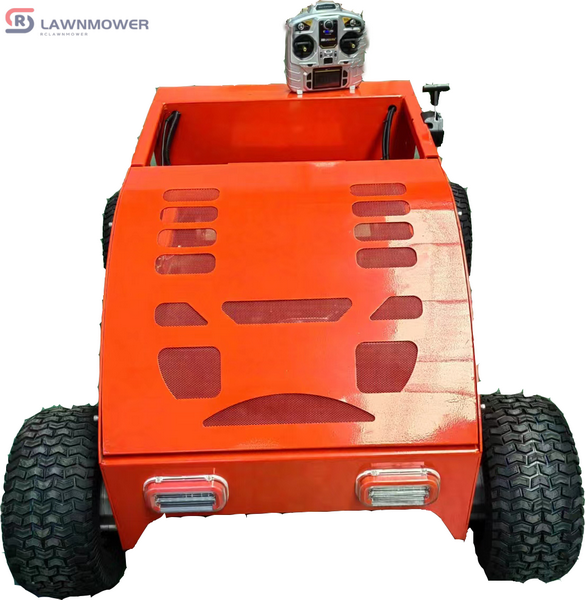
Remote Control Mower vs Robot Mower: Which One Actually Saves You Money?

Let me guess—you’re looking at that $2,000 price tag on a robot mower and thinking, “That’s a lot of money for something that just cuts grass.” Trust me, I had the same reaction. But then I started digging into the actual costs, and what I found surprised me.
After running the numbers on both remote control mowers and fully autonomous robot mowers, I realized most people are making their decision based on the wrong metric. They look at the sticker price and stop there. Big mistake.
The Upfront Cost Reality Check
Here’s what you’re actually looking at when you buy:
| Mower Type | Price Range | What You Get |
| Basic Remote Control Mower | $800 – $1,500 | Manual control, larger cutting width, handles rough terrain |
| Mid-Range Robot Mower | $1,200 – $2,000 | Autonomous operation, app control, boundary wire required |
| Premium Robot Mower | $2,000 – $3,500 | GPS navigation, multi-zone support, theft protection |
| Hybrid Remote/Auto Mower | $1,800 – $2,800 | Both manual and autonomous modes |
At first glance, the remote control mower looks like the budget winner. But that’s before you factor in the hidden costs that nobody talks about.
The Hidden Costs Nobody Mentions
Remote Control Mower Hidden Costs
Labor Cost: This is the big one. With a remote control mower, you’re still actively mowing. You just happen to be standing 50 feet away with a controller.
Let’s say you mow once a week for 6 months (growing season in most areas). That’s about 26 mows per year.
- Time per mow: 45 minutes average
- Your time value: $25/hour (conservative estimate)
- Annual labor cost: 26 × 0.75 × $25 = $487.50
Fuel/Maintenance: Remote control mowers are typically gas-powered or larger electric models. Expect:
- Fuel/charging: $100-150/year
- Maintenance: $150-200/year (oil changes, blade sharpening, etc.)
Total first-year hidden cost: $737-837
Robot Mower Hidden Costs
Installation: This is your biggest upfront hidden cost.
- DIY boundary wire installation: $0 (but 4-8 hours of your time)
- Professional installation: $300-600
- Wireless GPS models: $0 installation
Electricity: About $3-5 per month during growing season, so $18-30/year.
Maintenance: Much lower than gas mowers:
- Blade replacement: $30-50/year
- Occasional wire repair: $20-40/year
Total first-year hidden cost: $68-120 (or $368-720 with pro installation)
The 5-Year Cost Breakdown
Now let’s look at the real numbers over 5 years:
Remote Control Mower (5 Years)
| Year | Purchase | Hidden Costs | Total |
| 1 | $1,200 | $787 | $1,987 |
| 2 | $0 | $687 | $687 |
| 3 | $0 | $687 | $687 |
| 4 | $0 | $687 | $687 |
| 5 | $0 | $687 | $687 |
| Total | $1,200 | $3,535 | $4,735 |
Robot Mower (5 Years)
| Year | Purchase | Hidden Costs | Total |
| 1 | $1,800 | $395 | $2,195 |
| 2 | $0 | $95 | $95 |
| 3 | $0 | $95 | $95 |
| 4 | $0 | $95 | $95 |
| 5 | $0 | $95 | $95 |
| Total | $1,800 | $775 | $2,575 |
The robot mower saves you $2,160 over 5 years. And that doesn’t even account for the value of your time.
But Wait—There’s a Catch
Before you rush out and buy a robot mower, you need to know something important: they’re not for everyone.
When a Remote Control Mower Makes More Sense
Steep slopes: Most robot mowers max out at 30-35% slope. If you’ve got serious hills, a remote control mower with tracks or larger wheels will handle it better.
Rough terrain: Rocks, roots, uneven ground—remote control mowers are generally more robust and can handle abuse that would confuse a robot mower’s sensors.
Large commercial properties: For 2+ acres, a large remote control mower will get the job done faster than most robot mowers.
Budget constraints: If that $1,800 upfront cost is a stretch, a $800 remote control mower is still better than pushing a walk-behind mower.
When a Robot Mower Is the Clear Winner
Small to medium lawns (under 0.5 acres): This is the sweet spot. The mower runs while you’re at work. You come home to a perfect lawn.
Regular suburban lots: Flat terrain, defined boundaries, no major obstacles—robot mowers excel here.
Tech-savvy homeowners: If you love the idea of checking your lawn’s status from your phone and scheduling mows around weather forecasts, you’ll love the app features.
Anyone who values weekend time: Seriously, what would you do with an extra 40 hours per year?
The Hybrid Option Nobody Talks About
There’s a third category that doesn’t get enough attention: hybrid mowers that offer both remote control and autonomous modes.
These typically cost $1,800-2,800 and give you the best of both worlds:
- Let it run autonomously for regular maintenance
- Take manual control for tricky areas or when you want to get the job done faster
- Handle steep sections manually, let the robot handle the flat areas
If your property has mixed terrain, this might be your best bet.
Real Talk: My Recommendation
After owning both types, here’s my honest take:
Buy a robot mower if:
- Your lawn is under 0.75 acres
- You have relatively flat terrain
- You hate spending weekend time on yard work
- You can afford the upfront cost
Buy a remote control mower if:
- You have steep slopes or rough terrain
- You enjoy the “driving” aspect of mowing
- Your lawn is over 1 acre
- You need the lower upfront cost
Consider a hybrid if:
- You have mixed terrain (some flat, some steep)
- You want flexibility for different situations
- Budget allows for the mid-range price point
The Bottom Line
The numbers don’t lie—over a 5-year period, a robot mower is significantly cheaper when you factor in your time. But that only matters if the mower actually works for your property.
Before you buy, walk your lawn and ask yourself:
- Are there slopes steeper than 30%?
- Lots of obstacles, rocks, or roots?
- Do I actually enjoy mowing, or is it a chore?
Your honest answers to those questions will tell you which type of mower is right for you.
What’s your lawn situation? Drop a comment with your property size and terrain type—I’ll give you my recommendation on which mower type fits your needs.
Last updated: March 2026 | Based on 3 years of ownership experience with both mower types